James
Speakers Conference at CA Boom II - July 29, 2005
 Land+Living has been asked to host one of the speakers conferences this year at CA Boom, and we have chosen to focus our topic on the role of landscape architecture in the design world and in shaping the society at large.
The panel will be held Friday, July 29th from 4:00 - 5:15 pm and will feature noted landscape architects David Fletcher, Tom Leader and Katie Spitz.
It is sure to be an interesting discussion, and we encourage you to attend (remember to register with our L+L discount code).
Link: CA Boom II Speakers Conference - Friday
Reference: CA Boom is a comin' (Land+Living)
Originally posted 7/18/2005
UPDATE: All panelists have been confirmed - David Fletcher, Tom Leader & Katie Spitz.
Isabelle Pateer's Other Waeyes Portfolio
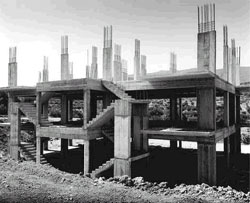 I have had a long standing fascination with construction sites... not unusual for a person of the architectural persuasion, I suppose. Sometimes I actually find unfinished buildings to be more interesting than the finished product.
Dutch photographer Isabelle Pateer features some wonderful images of construction sites as part of her portfolio.
Link: Other Waeyes Portfolio
Via: Things Magazine
New contributors at Land+Living
 There has been a frenzy of offline activity here at Land+Living during the past couple of weeks. We have been hard at work planning for the future, and part of that plan includes the addition of new contributors.
Over the past 14 months, we have worked hard to establish the base and tone of Land+Living and now we feel that it is time to add some new voices and viewpoints... and so that you know exactly who is saying what, we have just added a by-line to each post as well… see, it says "posted by James" up there.
A few new contributors will be making their Land+Living debut in the next couple of months. Please join Anthony and me in welcoming our L+L newbies (like Deborah) who are sure to add their own unique perspectives to Land+Living! Bios will be uploaded as each contributor comes online.
Modern planning redefined by a movie maker
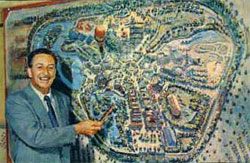 Disneyland is not regarded fondly by the architecture and design community at large with it's faux castles, jungles and streets and oversized rubber-headed rodents gallivanting about. But there is no denying the genius of the planning concepts and methods pioneered and honed by Walt Disney and his "Imagineers" and the impacts that their work has had not only on American and international cultures, but also on the design professions.
At Disneyland, designers created the first physical space conceptualized as an interactive experience using cinemagraphic story telling devices to choreograph the free movements of visitors through a three dimensional fantasy movie. Sequences of spaces and transitions were carefully planned to combine disparate elements into a cohesive whole.
An article in the LA Times talks a bit about the influence of the park on everyday places such as malls and revived downtowns, "lifestyle centers" and other places where the distinction between fantasy and reality has been blurred beyond the gated and bermed Magic Kingdom.
Article: LA Times - A Park With a Powerful Spell
Link: Wikipedia - Disneyland
Link: Disney corporate history - Disneyland
Link: Disneyland Beginnings
CA Boom II: July 28 - 31, 2005 in Santa Monica, California
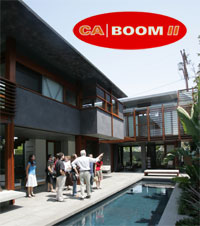 It's almost here, have you registered yet?
We are pleased to be able to offer Land+Living readers a discount online or at the door using code llg510 (pre-registration provides a better discount).
Land+Living will also be hosting a panel discussion entitled Breaking Ground: New Directions in Landscape Architecture as part of the Speaker Conference... watch for our "official" announcement of panel participants soon featuring David Fletcher, Tom Leader and Katherine Spitz.
We'll see you there!
Link: CA Boom II
Reference: CA Boom II (Land+Living)
Student work from the AA
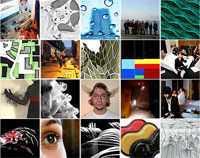 More student work to browse, this time from the Architectural Association in London.
The AA has set up a website featuring student work from all levels and programs at their projects Review 04/05. Lots to see…
Link: AA Projects Review
Via: Archinect
DWR contest to identify the architect of a 1952 modern home
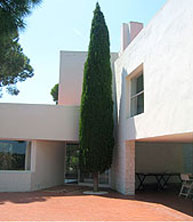 The recent DWR newsletter features a contest to identify the designer or location of a 1952 house by an "influential but relatively obscure" architect. The first 20 responses to either name the architect or the location of the residence will receive a book devoted to the architect in question.
The images are worth a peek even if the contest doesn't appeal to you.
Link: DWR Newsletter
Submissions: summersurvey@dwr.com
UPDATE: Click here for the answer
American Society of Landscape Archiects 2005 Professional Award winners selected
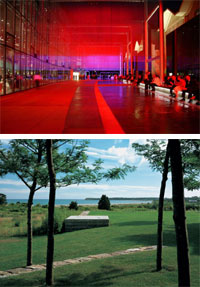 Thirty-three projects were seleced to receive awards from a field of over 520 entries.
"This year’s awards projects demonstrated the rising cultural relevance of responsible planning and good design across a range of scales and project types in the United States and abroad," said Gary Hilderbrand, FASLA, jury chair and principal at Reed Hilderbrand Associates Inc. "By bringing forward a compelling set of diverse projects, this jury showcased some of the successes landscape architects are having with the complex issues that arise for thoughtful design practices today, including the drive for clarity, expressiveness, rigor, and durability in design."
Link: ASLA 2005 Professional Awards
Making a case for native and climate-appropriate plants
 We occasionally show our southern California bias... but I am not sure why the New York Times shows theirs so often.
The New York Times published an article yesterday profiling proponents of "native" plants in California, focusing on Rene Russo's crusade to promote native species... an interest we share and which we subtly display with our side bar Dudlea image. In my experience, newspapers are infamously inept in their coverage of nature and landscape, and while this article is interesting and worth reading, I find the poor reporting to be annoying. For example:
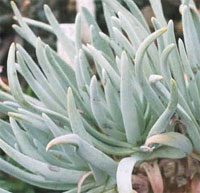
Native plants like senecio and aloe, which fill the yard in front of Andree Matton's house in Monrovia, Calif., thrive on less water than grass.
Senecio and aloe are not native even to this continent, let alone to Monrovia, California.
Article: NY Times - Flora With a Star in Its Corner
Reference: Garden/garden (L+L)
Article by Kim Wilkie
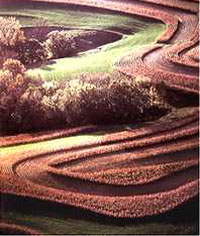 Land+Living will be hosting a speakers panel for the upcoming Speakers Conference at CA Boom later this month... more on that later... but related to the topic that said panel will discuss is this article by Richmond, U.K. based landscape architect Kim Wilkie.
The contribution which landscape architects can make at this point is immense and pivotal. Landscape architecture addresses both the built and the cultivated environment. It thinks about city as well as countryside; housing as well as agriculture; cultural history as well as nature conservation.
Mr. Wilkie has several interesting articles posted on his website which is nice to see.
Link: The Future of Landscape Architecture
Reference: Shaping the landscape of the world
Claude Cormier Architectes Paysagiestes
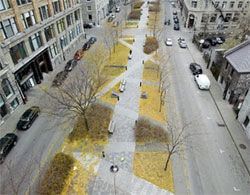 We've always found the website for Claude Cormier Architectes Paysagiestes (that's "Landscape Architects" for you non-franophones) to be rather amusing with it's theme of a landscape architect's Disneyland, excuse-moi, Courmierland in this case, with Frontierlandscape, Fantasylandscapes, Tomorrowlandscapes and Adventurelandscapes. To our dismay, the website is currently a bit low on content, but their work is interesting to browse even in abbreviated form.
What made us decide to feature Monsieur Cormier today was the discussion of our recent Shortcut post, which made us think of Cormier's design of Place d'Youville also in Montréal (shown right and below with more text).
Link: Place Youville
Firm: Claude Cormier Architectes Paysagiestes
Join the Land+Living team
 We want you... but only if you're good.
We are looking for a creative person with an eye for design and a knack for finding the goods. What will you get in return? You get to hitch your wagon to our kick ass, critically acclaimed design web journal. And, you might even make a few bucks (emphasis on few) in the process.
If you are interested in being a contributing writer to Land+Living, contact us with a brief introduction to tell us why you think that you are up to the task. Good luck.
Socially and environmentally responsible furnishings
 SCI-Arc people seem to be everywhere I look lately.
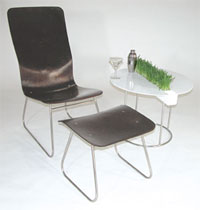
Ann Arbor based designer Jonas Hauptman is a part-time faculty member at SCI-Arc, and has just launched a line of environmentally responsible chairs and tables.
The seats are from a composite of reconstituted North American Aspen Tree flakes and a formaldehyde-free adhesive system in a process inspired by the process used to produce shipping pallets. The seats are available in a variety of stock clear and satin tinted finishes. The steel tables feature a heavy duty high gloss white powder coat finish and are suitable for outdoor use.
Link: Hauptman Products Inc.
Via: Inhabit
Landscape installation
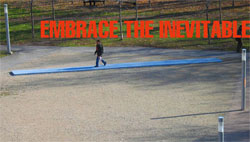 This simple landscape installation deals with the inevitable transformation of designed spaces by the people who inhabit and use them. It speaks to a larger issue in the design world in a way that resonates with us.
Montréal based architect Hal Ingberg (and fellow SCI-Arc alumnus) designed a piece that acknowledges and reinforces the traces of unplanned movements to and from a building at the Université de Montréal.
These traces mark the most natural and firect path of movement to and from the building. However, they have not been designed as part of the building's landscape strategy. Marked by the footprints of numerous building users, they are in effect blemishes, inscribed as corrections to the formalized movement sequence.
We can all personally attest to this non-orthogonal tendency as it pertains to human movement. Historically, it has been employed as an opportunity to inflect richly upon architectural space.
Link: Hal Ingberg
"Form follows feminine"
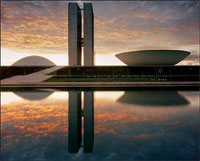 Funny how sometimes you are just not ready to seem something until you are in the right mindset. Way back in May, the New York Times Magazine published their Architecture 2005 issue which included a lengthy piece by Michael Kimmelman profiling the life and career of Brazilian modern master Oscar Niemeyer.
Our fascination this past weekend with images from Brazil has put us in the frame of mind to digest this retrospective, and we highly recommend it to you.
Article: NY Times Magazine - The Last of the Moderns
Link: Slideshow
A traditional terrace house transformed
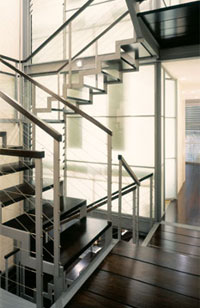 Sydney based firm Dale Jones-Evans Pty Ltd Architecture is committed to design that is of its place and time, a modern architecture that is truly Australian.
For this re-envisioned terrace house in Sydney, Dale Jones-Evans completely gutted the structure and inserted a new steel framed building into the shell. The center of the house features a vertical floating stairwell and illuminated glazed bathroom core. The floor plane extends out at the rear terminating at a sunken black 'grotto' pool, which is wrapped in a fluid woven metal sculptural veil.
Link: The Water House
Firm: Dale Jones-Evans Pty Ltd Architecture
Images of Brazil's architecture, urban landscape, etc.
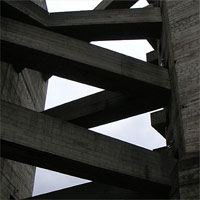 I have a penchant for this kind of photo documentation... it reminds me of architecture school (thank you, Mary Ann Ray).
Photo blogger Thomas Locke Hobbs features some very interesting and beautiful photos of his travels and experiences in Brazil; everything from buildings and urban vistas to culinary delights and signage/graffiti. There are also photos of men in drag and tighty-whities, not that there’s anything wrong with that...
Link: Thomas Locke Hobbs
Via: Cityrag
Thumbnail at right: SESC Pompeia, designed by Lina Bo Bardi, São Paulo.
West 8 selected as the design team for Jubilee Gardens in London
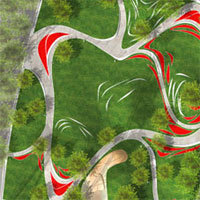 West 8’s design concept focuses heavily on developing an organic, lush and green park, with softly undulating hills. Trees and flowers will bloom throughout the year to provide a ‘botanical ambience’ for one of London’s most important green spaces. The sophisticated topography creates paths which are fluid and inviting, prime lookout points which frame dramatic, panoramic views of the Thames, the London skyline and the South Bank, and intimate spaces where people can find their own space to relax and enjoy the micro-climate. At night, a theatrical spectacle of light will subtly animate and play with the new weaving landscape.
Link: West 8 - Jubliee Gardens
Link: Jubilee Gardens
Article: LondonSE1 - Jubilee Gardens: West 8 selected by public for 'world class' park
Reference: West 8 (L+L)
Innovative Garden Structures
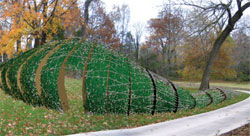 This exhibition at the Philbrook Museum of Art in Tulsa, Oklahoma, runs April 24 - October 16, 2005.
Architects from across North America were invited to submit design proposals for a contemporary vision of a traditional architecture type - the garden pavilion. The winning designs will be constructed and will "land" on Philbrook grounds as a six-month open-air exhibit, allowing audiences of all ages to explore and experience architecture-as-art in the landscape. The project will highlight Philbrook Gardens with structures that are in harmony with the landscape, introduce audiences to a variety of contemporary architectural forms, demonstrate that good design can be both affordable and friendly to the environment and enhance public awareness of promising, emerging architects.
Link: Philbrook Museum of Art
Originally posted 3/31/2005
UPDATE: The Archinect Image Gallery features some nice images of the installed designs.
Architectural tour by satellite
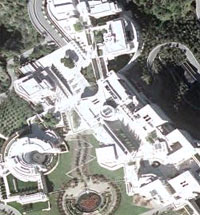 A Daily Dose of Architecture picked up the satellite imagery theme yesterday as well... must've been something in the air, or sunspots or something... and featured images of architectural landmarks yesterday.
We decided to do some reconassance as well and have a few architecture images of our own below. Let us know about your spy finds as well!
Link: The Grand Tour
Link: Google Maps
Thumbnail at right: Getty Center, Los Angeles by Richard Meier
Student work from the north-east
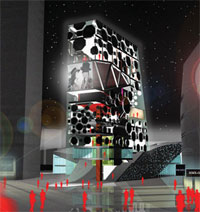 We find student design work to be incredibly interesting because of how it reflects the design world and speaks to the future.
The Architect's Newspaper features the work and thoughts of students from architecture schools in the "tri-state" (New York, New Jersey, Connecticut) area. Professors at 13 schools were asked to select one outstanding project from the last academic year. Check it out.
Link: The Architect's Newspaper - Kids These Days
Via: Archinect
Landscapes from space
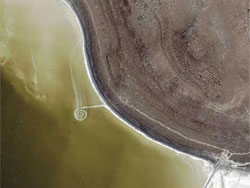 Today I saw something at Pruned, a new landscape blog that we like, that piqued my interest: satellite images of Land Art.
Pruned's post touts the merits of TerraServer, a site that I also prefer for aerial imagery and shows views of Robert Smithson's Spiral Jetty and Michael Heizer's Double Negative (beautifully manipulated images, by the way).
But, the post at Pruned inspired me to seek and share more sources for aerial landscape images.
Satellite Imagery Resources:
Related: Spiral Center for Land Use Interpretation
Related: Spiral Jetty Travelogue
Reference: Earthworks revealed (L+L)
Design / build remodel of industrial space into loft apartments in Tel Aviv
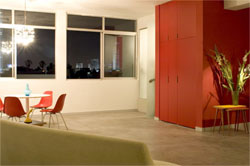 Designed and built by Tel Aviv, Israel based partnership U-I, Avi Laiser and Amir Shwarz, the lofts were built in an old diamond polishing factory that was vacant for more than 10 years. The project is aimed at a young population who look for contemporary rental spaces in the center of Tel Aviv’s business/industrial district, and desire a creative lifestyle.
The lofts were built on a very low budget in a speed time of 4 months using a flexible wall construction method that allows joining two spaces or more to create larger spaces in the future. The polished concrete floors are continuous and each unit got a colored wall or box that defines the usages of the open space. Right now the project is fully occupied with happy tenants.
UPDATE (7-29-09): Avi Laiser now has his own firm AR/Arch. We're not sure what Amir is up to these days.
Tom should've proposed here*
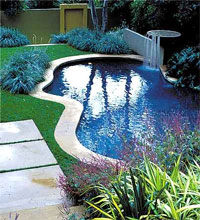 We've danced all around the work of Jay Griffith on Land+Living, but we've never dedicated a post to his firm's work. We've featured the work of his former partner Rob Steiner, the garden of his current partner Russ Cletta and we linked to an article in the LA Times Magazine that featured his design for a residence in Rustic Canyon. But for some strange reason, we have never come across Jay's website before. Well, today we did, and we want to share it with you.
Jay Griffith's work is fit for a Hollywood movie, his landscapes are dressed sets in the best sense. So it is only fitting that many of his clients are Hollywood types as well. Jay's firms have always produced stunning visual compositions of color, material and space that unfold in carefully scripted sequence.
Firm: Griffith & Cletta
Images of the Lotus House by Kengo Kuma
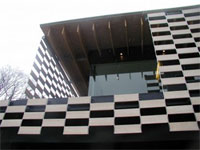 Nine images of the Lotus House by Tokyo based Kengo Kuma and Associates were recently posted at Archinect.
Kengo Kuma deftly balances the physical and the ephemeral, with a keen sense of the relationship between materials. Among the many awards he has received are the Spirit of Nature Wood Architecture Award, the International Stone Architecture Award and the AIA DuPONT Benedictus Award for Water / Glass.
Link: Archinect - Kengo Kuma Lotus House
Firm: Kengo Kuma and Associates
Book: Kengo Kuma: Selected Works
Q + A with "thought leader" Thom Mayne
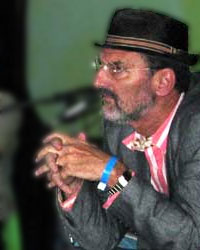 Architecture's bad-boy-cum-shining-star has garnered quite a bit of attention recently... something to do with winning the Pritzker Prize perhaps?
I.D. online features an interview with architect Thom Mayne of Morphosis.
A cult figure for 30 years, architect Thom Mayne says he’s surprised now to find himself in the mainstream.
Check it out.
Article: I.D. online - Q + A - Thom Mayne
A new variation of residential courtyard architecture
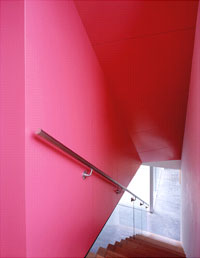 Designed by Los Angeles based architects Sharon Johnston and Mark Lee, the Sale House was designed to engage an early Morphosis project, the 2-4-6-8 house, in Venice, California (circa 1978-1981). The reconceptualized site concept created an internal configuration around exterior courtyard living spaces.
Living spaces were designed as an open and flow and are transparent to the outside. Taking cues from the colorful Morphosis building, each private interior room was "conceived as a unit of color, lined with resin panels of bright pink, turquoise and yellow orange."
Link: Johnston Marklee & Associates Sale House
Frank Lloyd Wright's Marin County Civic Center - Part II
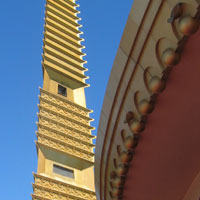 I mentioned previously that I became engrossed in research while putting this together. The most fascinating find on the web was Frank Lloyd Wright Resources (linked below) page hosted by the Marin County Library. This page includes a nice historical brief, photo gallery including images of the design and construction process, a project chronology and a listing of FLLW resources in the library's collection.
But what enthralled me the most was the voices of the Civic Center page which features clips in mp3 format of speeches by Frank Lloyd Wright from 1957 and 1958 and interviews with other architects, politicians and journalists who were involved with the project.
Before Wright's death on April 9, 1959, he had finished the supervision of drawings for the main building and the master plan for the site. In this section we will finish our exploration of Wright's design, and take a look at some of the changes and developments after his passing.
A stunning photo by William Allin Storrer depicts and early view of the Hall of Justice. The photo captures a landscape in keeping with what Wright had experienced before additional landscaping and trees were added to the site.
Link: Marin County Library FLLW Resources
Photos: Lee Sandstead
Photos: Picture the Scene
Photos: Digital Imaging Project
Photos: Digital Imaging Project (Post Office)
Part I - Three hills bridged with graceful arches
The 6th edition at Redford Gardens in Quebec
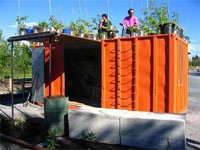 The 6th International Garden Festival will run from June 24 to October 2, 2005, at Redford Gardens in Grand-Métis, Québec.
On display will be new designs by seven selected designers from Australia, France, the United States and Canada as well as four gardens created for the fifth edition of the Festival.
Link: International Garden Festival
Visit: Jardins Métis, Redford Gardens
Frank Lloyd Wright's Marin County Civic Center - Part I
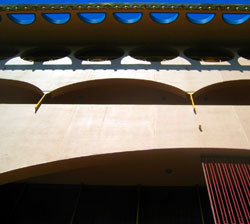 A couple of weekends ago, I was in Marin County, California, and I realized that while I have seen it from the freeway, I have never actually visited Frank Lloyd Wright's Marin County Civic Center.
Serendipitously, Frank Lloyd Wright was born on this day in 1867, and (most) of the photos I took at the Civic Center are the only ones that my malfunctioning digital camera did not corrupt. So today seems like a good day to share those photos, as well as some information about this important work by Frank Lloyd Wright.
I developed a childhood fascination with Wright's architecture nearly 20 years ago (ok, yes, I was an archi-geek even then), and spent much of my early self-guided architectural education reading as much as I could about Wright. While I continued this interest into my college years, I became much more interested in European modernism and new architecture, leaving my interest in Wright more or less latent until last week. As I began to put together what I intended as a very brief photo gallery of the Marin County Civic Center, I found myself engrossed in the research of details and history of the project. While by no means exhaustive, we have a two-part look (through photos and abundant linkage) at the Marin County Civic Center as it was planned, as it is now, and as it may be in the future.
| Visit: | Marin County Civic Center |
| | 3501 Civic Center Drive |
| | San Rafael California |
| | 415.499.6646 |
Photos: Marin County Civic Center Photographs
Book: An Architecture for Democracy: the Marin County Civic Center by Aaron Green
Part II - Marin Again